
Why You Never Skip From a Qualifying Call to a Winning Pitch
Key Takeaways

I Am Going to Say Something That Will Make Some of You Uncomfortable
I am working with a fundraising team right now that was about to do something that breaks my heart a little every time I see it.
A junior fundraising person on the team had a great qualifying call with a foundation. Smart program officer, warm conversation, real interest in the work. He took good notes, went back to his team, and then wrote a draft proposal that weekend. By Monday morning, he was ready to send it.
I asked him a question. I said:
“When is your next conversation with them?”
He looked at me and said.
“We are sending the proposal. That is the next step.”
That is the moment I am writing about today. That moment is the difference between a funder who gives you a one-time grant and a funder who carries you for a decade.
I have only had to learn this lesson once, and I learned it the hard way. And that’s why I am writing this, so you can learn it the easy way.
What Is the Binary Trap?
The binary trap is the assumption, baked into almost every nonprofit fundraising workflow I have ever audited, that a conversation with a funder is a one-shot event. Qualify. Pitch. Wait. Win or lose.
It is not a single mistake; it is a pattern, and it looks like this.
You get a meeting with a program officer; leave the qualifying call, and you write a proposal that maps everything you do onto everything they said they fund. You submit it, wait six weeks, and you get a polite no, or you get a yes for a smaller amount than you hoped, and then you spend the next twelve months trying to figure out why a conversation that felt so warm produced a result that felt so cold.
The reason is the structure, not the conversation. You took a qualifying call, which by definition is the beginning of a relationship, and you treated it like the end of one.
This is not a fundraising problem. It is a system problem. Most development shops are built around the proposal as the unit of work. Submissions are counted. Win rates are measured. The proposal is the deliverable. So the entire team’s incentive points toward getting the proposal out the door as fast as possible after the qualifying call, because that is what looks like productivity on the dashboard.
But the proposal is not the unit of work. The relationship is. And relationships are built across multiple conversations, not finalized inside one.
Why Do So Many Fundraising People Pitch After One Qualifying Call?
There are three reasons, and I see all three in almost every team we work with.
The first is fear of looking unprofessional. Fundraising people worry that asking for a second conversation makes them look like they did not pay attention the first time. The opposite is true. Funders read a request for a second conversation as a sign that you are taking the work seriously enough to get it right.
The second is the protection instinct. The same protection instinct I have written about in our post on why nonprofit staff is burning out shows up here too. You do not want to “bother” the program officer. All you want is to be the easy nonprofit to work with. You want to be polite. So you take what they gave you on the first qualifying call, you do the work yourself, and you submit. And the funder, who would have happily co-built the proposal with you, never gets the chance.
The third is the binary mental model itself. People in our sector grew up thinking of foundation fundraising as a Request For Proposals process. You see the RFP, write the response, submit it. And then, you get judged. That model still exists, and for some funders it is still the right approach. But the vast majority of the work that funds direct-service nonprofits at the $1M to $20M level does not happen through an RFP. It happens through a conversation. And conversations are not graded. They are continued.

If this article helped, the next one will too.
Sign up and we will send you insights once per week.
What a Co-Creation Conversation Actually Looks Like
Let me show you what I mean. This is the actual sequence I walked the junior fundraiser through this week. The names and amounts are anonymized, but the dynamic is exactly what happened.
The funder said on the first qualifying call:
“We tend to fund work in India, Kenya, Uganda, Tanzania, Malawi, Ethiopia, and Zambia.”
They gave a $100,000 ceiling per project. The fundraising person walked away ready to write a proposal for a $100,000 project in India because India was the first country on the list.
Here is what we did instead.
Ask Them What They Are Already Funding That Worked
Before you write a single word of a proposal, ask the funder:
“What is a recent project of ours, or of an organization like ours, that you funded and felt really good about?”
The answer to that question is more strategically valuable than any RFP language. Before you write a single word of a proposal, ask the funder:
“What is a recent project of ours, or of an organization like ours, that you funded and felt really good about?”
The answer to that question is more strategically valuable than any RFP language. You’ll gain insight into how they define success, the scale of projects they genuinely prefer to support (which is often different from the maximum amount listed on their website), the reporting outcomes they care most about, and the types of results they are excited to share with their board and stakeholders.
You cannot get that answer from their website. You can only get it from them.
Ask Them About Geography (Not Just Programs)
When the funder gave a list of seven countries, the junior fundraiser took that as the answer. But the list was a starting point, not a contract. So we sent this note back to the program officer. “Our team is working on an LOI for you right now. We have several great options. Uganda keeps coming up in our portfolio. I did not see it on your list. Would you have any interest there? If not, it is okay. I was just curious.”
That is it. That is the whole note.
The response we got back inside of 48 hours was:
“Actually, yes, we have funded two projects in Uganda in the last 18 months. Tell me more about what you are thinking.”
The list on the website was incomplete. The list in the program officer’s head was different. We never would have known if we had not asked. And the geography we ended up choosing for the proposal added $300,000 to the project’s overall size and gave the funder a more strategic, less crowded place to plant their flag.
Ask Them What the Last Successful Proposal Looked Like
This one feels too direct to a lot of fundraisers. It is not. It is exactly what good program officers want to be asked.
“If you could send me one or two of your favorite proposals from the last cycle, redacted however you need them to be, that would help us shape ours in a way that respects your team’s time.”
Some program officers will send them. Some will not. The ones who do are telling you exactly how to win. The ones who do not are telling you something about the relationship that is also useful to know. Either way, you have learned something.
Reframe the Project Budget for a Funder Who Caps at 25 Percent
Here is the second mistake I see all the time, and it is the one that has the longest tail of consequence.
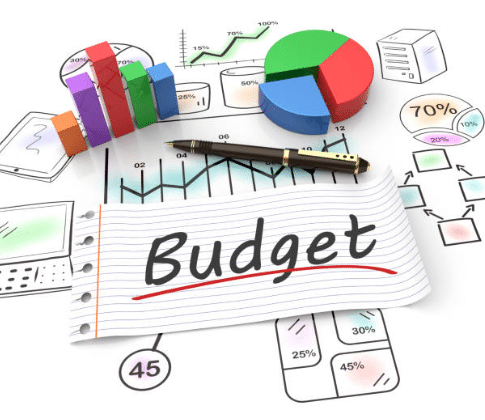
A funder told us they typically cap their gift at 25 percent of a project’s total cost. The junior fundraiser’s instinct was to design a $100,000 project so that the funder could sponsor the whole thing. That is the wrong instinct.
The right instinct is to design a $400,000 project, and then ask the funder to cover their full 25 percent of it. You present the entire budget. You show them the other $300,000, and you tell them where it is coming from, or where you intend to source it from.
Why does this matter?
First, this funder told us they want to see the whole picture. They are not interested in being one of three funders sitting in a silo. They are interested in being part of a real, fully-resourced project that is actually going to happen. Showing them a $100,000 project and asking them to cover the entire cost tells them you are small. Showing them a $400,000 project and asking them to cover their natural slice tells them you are real.
Second, you are not building a one-year relationship. You are building a ten-year one. Funders like this fund the same organizations and the same projects over and over again. If you start the relationship at $100,000, you have anchored the ceiling. If you start the relationship at $400,000 with a clear next phase that grows to $800,000, you have anchored the floor.
Every fundraiser who has ever scaled an institutional funding line at a $10M-plus organization has internalized this. The fundraisers running the $1M to $20M organizations we work with often have not, because they were trained inside development shops where the proposal was the unit of work. The proposal is not the unit of work. The architecture of the relationship is.
Get a Second Conversation Without Looking Desperate
Let me say this one out loud, because so many fundraisers freeze at this step.
You do not need a clever excuse to ask for a second qualifying call. You need a useful one. Here are three that work every single time.
“We have been working on the LOI, and a few options have surfaced that I want to run by you before we put pen to paper. Could we grab 20 minutes next week?”
“We are between two different framings for this project. I would love your read on which one fits your portfolio better before we invest the time writing it up.”
“We have heard from a couple of other funders that they would be interested in co-funding this work. Could we talk through whether you would want to be part of that group, and what that would look like from your end?”
Notice the structure. You are not asking the funder to do work. You are protecting their time by checking in before you waste it. Program officers are buried in proposals that should never have been written. Asking them to triage before you write is the single most respectful thing you can do.
The Long Game of Foundation Funding
The funders who carry direct-service nonprofits at the $1M to $20M level for the long haul are the ones who feel like co-owners of the work. They believe in it and have shaped it. They have been asked questions, and they have answered them, and their fingerprints are on the project’s design.
You cannot get there with a one-call-and-a-pitch workflow. You can only get there by treating every qualifying call as the opening move in a long conversation, and by deliberately building in the second, third, and fourth conversations that turn a polite program officer into a long-term partner.
For more on this dynamic, our post on how to ask a major donor for a specific amount goes into the individual side of this same architecture. The foundation work and the major gifts work are governed by the same underlying principles. Co-creation beats pitching, every time.
According to the Council on Foundations, the median number of times a successful institutional grantee interacts with a program officer before the first gift is between four and six. Not one. Not two. Four to six. The data is on the side of the long conversation.
What Does the First Year of a Co-Created Funding Relationship Actually Look Like?
Quick sketch. Here is what we see when this works.
- 1st Month: qualifying call. Ask questions. Listen. Send a follow-up note within 48 hours summarizing what you heard, with one or two specific options you want to explore.
- 2nd Month: second conversation. Bring two or three project framings. Ask which one fits the funder’s portfolio. Walk out with a clear direction.
- 3rd Month: draft LOI. Send to the program officer for feedback before formal submission. Ask, “Did I get this right? What would you change?”
- 4th Month: submit the formal LOI or proposal with the program officer’s fingerprints already on it. The grant decision is almost a formality at this point because you have been working together for three months.
- 6th Month: gift arrives. Begin reporting on the rhythm the funder told you they wanted, not the one buried in their grant agreement template.
- 12th Month: invite the program officer to a site visit, a donor event, or a Zoom with the team. Begin the conversation about year two before they ask.
That is the architecture. That is the long game. And none of it is possible if your default move after a qualifying call is to write a proposal in a silo and submit it.
FAQs
What if the funder really wants a proposal, not a conversation?
Some do. The largest institutional funders (Lily, Gates, Ford, MacArthur) often have formal RFP processes where additional outreach is unwelcome. Read the guidance on their website carefully. If they say no additional contact, respect that. But for the vast majority of foundation work that funds direct-service organizations at the $1M to $20M level, the program officer wants to talk. Ask.
How do I ask for a second conversation if the program officer was hard to reach in the first place?
Start with email. Be specific about why a second conversation will save them time, not cost them time. Use one of the three framings above. If you get no response in two weeks, send a one-line bump. If you still get no response after that, you have learned something about the relationship, and you write the best proposal you can write without them.
Does this work for smaller foundations too?
Yes, and arguably it matters more. Smaller family foundations and community foundations often do not have a formal RFP process at all. Everything is conversation. If you are not co-creating with them, you are not actually building a fundraising program. You are submitting documents into a void.
What if my development team does not have the capacity for this many conversations?
That is the actual question, and it is the right one. The answer is that you do fewer proposals and you co-create the ones you do. A team that submits 40 proposals a year with a 12 percent win rate is doing worse than a team that submits 12 proposals a year with a 65 percent win rate, on every dimension that matters, including total dollars raised and staff burnout. Volume is not the strategy. Architecture is.
How do I know if a funder is actually open to co-creation?
You ask. On the first call. “We tend to do our best work with funders when we can build the proposal in conversation with you, rather than send something cold. How does your team like to work?” Their answer will tell you everything. The funders who light up at that question are your long-term partners. The funders who look uncomfortable are telling you to send a proposal and move on. Both are useful signals.
Wrapping Up
The binary trap is the single most expensive habit in foundation fundraising. It costs us the long-term relationships that fund organizations for decades; it costs us the project sizing that lets us scale; it costs us the trust that makes year two, year three, and year four possible.
The fix is not complicated. After every qualifying call, before you write a single sentence of a proposal, ask yourself one question. What is the next conversation? If you do not have an answer, you do not have a strategy. You have a submission.
Co-create the proposal. Ask for a second qualifying call. Build the budget around the work, not around the funder’s ceiling. Believe that the funder wants to hear from you, because they almost always do.
Stop pitching. Start journeying.
Want to know where you are right now?

Take the quiz
“Which Fundraising Stage Are You In?“
Get clarity on what’s holding you back and specific strategies that actually work for where you are right now.
Schedule a Discovery Call
Schedule a discovery call to discuss how passionate, ethical fundraising could transform your organization’s impact and revenue growth.
Choose your path above and let’s get started. You can also subscribe to our newsletter to get more insights